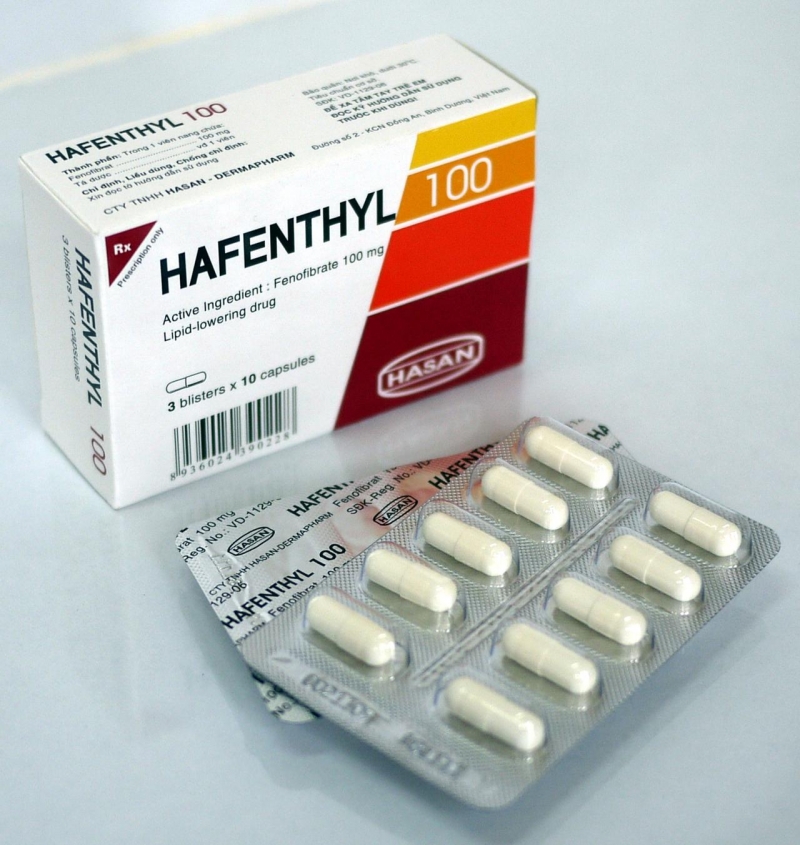
Fenofibrate is used to lower triglyceride (fat-like substances) levels and cholesterol levels in the blood. This may help prevent the development of pancreatitis (inflammation of the pancreas) caused by high levels of triglycerides in the blood.
fenofibrate is available only with your doctor's prescription.
Before Using fenofibrate
In deciding to use a medicine, the risks of taking the medicine must be weighed against the good it will do. This is a decision you and your doctor will make. For fenofibrate, the following should be considered:
In addition to its helpful effects in treating your medical problem, this type of medicine may have some harmful effects. Results of large studies using other agents that are similar to fenofibrate seem to suggest that fenofibrate may increase the patient's risk of cancer, pancreatitis (inflammation of the pancreas), gallstones, and problems from gallbladder surgery. Studies with fenofibrate in rats found an increased risk of liver and pancreatic tumors when doses up to 6 times the human dose were given for a long time. Be sure you have discussed this with your doctor before taking fenofibrate.
Allergies
Tell your doctor if you have ever had any unusual or allergic reaction to fenofibrate or any other medicines. Also tell your health care professional if you have any other types of allergies, such as to foods, dyes, preservatives, or animals. For non-prescription products, read the label or package ingredients carefully.
Pediatric
Studies on fenofibrate have been done only in adult patients, and there is no specific information comparing use of fenofibrate in children with use in other age groups.
Geriatric
Although the effects of fenofibrate have not been fully tested in older people, fenofibrate has been tested in a limited number of patients 77 through 87 years of age and has not been shown to cause problems when given to older people.
Pregnancy
Pregnancy Category
Explanation
All Trimesters
C
Animal studies have shown an adverse effect and there are no adequate studies in pregnant women OR no animal studies have been conducted and there are no adequate studies in pregnant women.
Breast Feeding
There are no adequate studies in women for determining infant risk when using this medication during breastfeeding. Weigh the potential benefits against the potential risks before taking this medication while breastfeeding.
Interactions with Medicines
Using fenofibrate with any of the following medicines is usually not recommended, but may be required in some cases. If both medicines are prescribed together, your doctor may change the dose or how often you use one or both of the medicines.
Acenocoumarol
Anisindione
Atorvastatin
Cerivastatin
Dicumarol
Fluvastatin
Lovastatin
Phenindione
Phenprocoumon
Pitavastatin
Pravastatin
Rosuvastatin
Simvastatin
Warfarin
Using fenofibrate with any of the following medicines may cause an increased risk of certain side effects, but using both drugs may be the best treatment for you. If both medicines are prescribed together, your doctor may change the dose or how often you use one or both of the medicines.
Colchicine
Colestipol
Ezetimibe
Glimepiride
Interactions with Food/Tobacco/Alcohol
Certain medicines should not be used at or around the time of eating food or eating certain types of food since interactions may occur. Using alcohol or tobacco with certain medicines may also cause interactions to occur. Discuss with your healthcare professional the use of your medicine with food, alcohol, or tobacco.
Other Medical Problems
The presence of other medical problems may affect the use of fenofibrate. Make sure you tell your doctor if you have any other medical problems, especially:
Gallbladder disease or
Gallstones or
Liver disease—Fenofibrate may make these conditions worse. You should NOT use fenofibrate if you have any of these conditions.
Kidney disease—Higher blood levels of fenofibrate may result, which may increase the chance of side effects or make kidney problems worse. If you have severe kidney problems, you should NOT use fenofibrate.
Proper Use of fenofibrate
Before prescribing medicine for your condition, your doctor will probably try to control your condition by prescribing a personal diet for you. Such a diet may be low in fats, sugars, and/or cholesterol. Many people are able to control their condition by carefully following their doctor's orders for proper diet and exercise. Medicine is prescribed only when additional help is needed and is effective only when a schedule of diet and exercise is properly followed.
Use fenofibrate only as directed by your doctor. Take the medication at the same time each day to maintain the medication's effect. Do not use more or less of it, and do not use it more often than your doctor ordered.
Follow carefully the special diet your doctor gave you. This is the most important part of controlling your condition and is necessary if the medicine is to work properly.
fenofibrate is usually taken once a day. Lipofen™, and Lofibra™ should be taken with a meal. Antara™, Tricor®, and Triglide™ can be taken with or without a meal.
Dosing
The dose of fenofibrate will be different for different patients. Follow your doctor's orders or the directions on the label. The following information includes only the average doses of fenofibrate. If your dose is different, do not change it unless your doctor tells you to do so.
The amount of medicine that you take depends on the strength of the medicine. Also, the number of doses you take each day, the time allowed between doses, and the length of time you take the medicine depend on the medical problem for which you are using the medicine.
For oral dosage form (capsules):
For hypertriglyceridemia (to lower triglycerides):
Adults—
Antara™—At first, 43 milligrams (mg) once a day with a meal. Your doctor may increase your dose as needed.
Lipofen™—At first, 50 to 150 milligrams (mg) once a day with a meal. Your doctor may increase your dose as needed.
Lofibra™—At first, 67 milligrams (mg) once a day with a meal. Your doctor may increase your dose as needed.
.
For hypercholesteremia (to lower cholesterol):
Adults—
Antara™—130 milligrams (mg) once a day with a meal.
Lipofen™—150 milligrams (mg) once a day with a meal.
Lofibra™—200 milligrams (mg) once a day with a meal.
For oral dosage form (tablets):
For hypertriglyceridemia (to lower triglycerides):
Adults—
Tricor®—At first, 48 to 145 milligrams (mg) once daily. Your doctor may increase your dose as needed.
Triglide®—At first, 50 to 160 milligrams (mg) once daily. Your doctor may increase your dose as needed.
For hypercholesteremia (to lower cholesterol):
Adults
Tricor®—145 milligrams (mg) once daily.
Triglide®—160 milligrams (mg) once daily.
Missed Dose
If you miss a dose of fenofibrate, take it as soon as possible. However, if it is almost time for your next dose, skip the missed dose and go back to your regular dosing schedule. Do not double doses.
Storage
Store the medicine in a closed container at room temperature, away from heat, moisture, and direct light. Keep from freezing.
Keep out of the reach of children.
Do not keep outdated medicine or medicine no longer needed.
Precautions While Using fenofibrate
It is very important that your doctor check your progress at regular visits. This will allow your doctor to see if the medicine is working properly to lower your triglyceride levels and to decide if you should continue to take it.
Check with your doctor right away if you experience unexplained muscle pain, tenderness, or weakness, especially if accompanied by unusual tiredness or fever.
Check with your doctor right away if you think that you may be pregnant. Fenofibrate may cause birth defects or other problems in the baby if taken during pregnancy.
Check with your doctor right away if you have signs of an infection, such as a fever, sore throat, or chills.
Fenofibrate Side Effects
Along with its needed effects, a medicine may cause some unwanted effects. Although not all of these side effects may occur, if they do occur they may need medical attention.
Check with your doctor immediately if any of the following side effects occur:
Rare
Chills, fever, or sore throat
Check with your doctor as soon as possible if any of the following side effects occur:
Less common
Chills, fever, muscle aches and pains, or nausea and/or vomiting
hives
infections
itching (generalized)
skin rash
Rare
Bloating or pain of the stomach
chronic indigestion
cough and shortness of breath or troubled breathing
dark urine
general ill feeling
loss of appetite
muscle cramps, pain, stiffness, swelling, or weakness
nausea
unusual bleeding or bruising
unusual tiredness
vomiting
yellow eyes or skin
Some side effects may occur that usually do not need medical attention. These side effects may go away during treatment as your body adjusts to the medicine. Also, your health care professional may be able to tell you about ways to prevent or reduce some of these side effects. Check with your health care professional if any of the following side effects continue or are bothersome or if you have any questions about them:
More common
Chest congestion
difficulty breathing
Less common
Back pain
belching
constipation
decreased sexual drive
diarrhea
dizziness
eye irritation
gas
headache
increased sensitivity of the skin to sunlight
lack or loss of strength
stomach pain
stuffy nose
Other side effects not listed may also occur in some patients. If you notice any other effects, check with your healthcare professional.


 Home
Home About us
.gif) Products
Products.gif) Medical knowledge
Medical knowledge Health Community
 Time of Medicine
 Relax
Relax News
News Career
 Shop online
 Contact US
 Products
 CALCIUM HASAN product
.png) Product Search
Product Search.gif) Usage consultation
Usage consultation