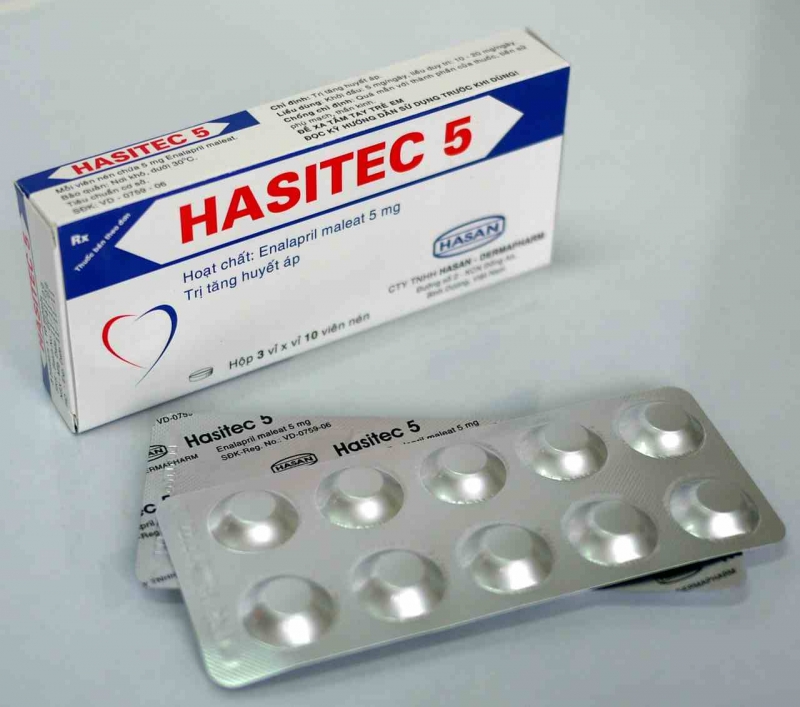
Enalapril is used alone or together with other medicines to treat high blood pressure (hypertension). High blood pressure adds to the workload of the heart and arteries. If it continues for a long time, the heart and arteries may not function properly. This can damage the blood vessels of the brain, heart, and kidneys, resulting in a stroke, heart failure, or kidney failure. High blood pressure may also increase the risk of heart attacks. These problems may be less likely to occur if blood pressure is controlled .
Enalapril works by blocking an enzyme in the body that is necessary to produce a substance that causes blood vessels to tighten. As a result, the blood vessels relax. This lowers blood pressure and increases the supply of blood and oxygen to the heart .
In addition, enalapril is used to treat or prevent congestive heart failure. It works to increase the functioning of the left ventricle in the heart. enalapril may be used for other conditions as determined by your doctor .
enalapril is available only with your doctor's prescription .
Before Using enalapril
In deciding to use a medicine, the risks of taking the medicine must be weighed against the good it will do. This is a decision you and your doctor will make. For enalapril, the following should be considered:
Allergies
Tell your doctor if you have ever had any unusual or allergic reaction to enalapril or any other medicines. Also tell your health care professional if you have any other types of allergies, such as to foods, dyes, preservatives, or animals. For non-prescription products, read the label or package ingredients carefully.
Pediatric
Appropriate studies performed to date have not demonstrated pediatrics-specific problems that would limit the usefulness of enalapril in children with hypertension who are 1 month to 16 years of age. Safety and efficacy have not been established in babies under 1 month of age .
Geriatric
No information is available on the relationship of age to the effects of enalapril in geriatric patients. However, elderly patients are more likely to have age-related kidney problems, which may require an adjustment of dose in patients receiving enalapril .
Pregnancy
Pregnancy Category
Explanation
1st Trimester
C
Animal studies have shown an adverse effect and there are no adequate studies in pregnant women OR no animal studies have been conducted and there are no adequate studies in pregnant women.
2nd Trimester
D
Studies in pregnant women have demonstrated a risk to the fetus. However, the benefits of therapy in a life threatening situation or a serious disease, may outweigh the potential risk.
3rd Trimester
D
Studies in pregnant women have demonstrated a risk to the fetus. However, the benefits of therapy in a life threatening situation or a serious disease, may outweigh the potential risk.
Breast Feeding
Studies in women suggest that this medication poses minimal risk to the infant when used during breastfeeding.
Interactions with Medicines
Using enalapril with any of the following medicines is usually not recommended, but may be required in some cases. If both medicines are prescribed together, your doctor may change the dose or how often you use one or both of the medicines.
Allopurinol
Amiloride
Azathioprine
Canrenoate
Eplerenone
Interferon Alfa-2a
Potassium
Spironolactone
Triamterene
Using enalapril with any of the following medicines may cause an increased risk of certain side effects, but using both drugs may be the best treatment for you. If both medicines are prescribed together, your doctor may change the dose or how often you use one or both of the medicines.
Aceclofenac
Acemetacin
Alclofenac
Aliskiren
Apazone
Aspirin
Azosemide
Bemetizide
Bendroflumethiazide
Benoxaprofen
Benzthiazide
Bromfenac
Bufexamac
Bumetanide
Bupivacaine
Buthiazide
Capsaicin
Carprofen
Celecoxib
Chlorothiazide
Chlorthalidone
Clometacin
Clomipramine
Clonixin
Clopamide
Cyclopenthiazide
Cyclothiazide
Dexketoprofen
Diclofenac
Diflunisal
Dipyrone
Droxicam
Ethacrynic Acid
Etodolac
Etofenamate
Felbinac
Fenbufen
Fenoprofen
Fentiazac
Floctafenine
Flufenamic Acid
Flurbiprofen
Furosemide
Gold Sodium Thiomalate
Hydrochlorothiazide
Hydroflumethiazide
Ibuprofen
Indapamide
Indomethacin
Indoprofen
Isoxicam
Ketoprofen
Ketorolac
Lornoxicam
Meclofenamate
Mefenamic Acid
Meloxicam
Metformin
Methyclothiazide
Metolazone
Nabumetone
Naproxen
Nesiritide
Niflumic Acid
Nimesulide
Oxaprozin
Oxyphenbutazone
Phenylbutazone
Pirazolac
Piretanide
Piroxicam
Pirprofen
Polythiazide
Propyphenazone
Proquazone
Quinethazone
Rifampin
Rofecoxib
Sulindac
Suprofen
Tenidap
Tenoxicam
Tiaprofenic Acid
Tolmetin
Torsemide
Trichlormethiazide
Trimethoprim
Valdecoxib
Xipamide
Zomepirac
Interactions with Food/Tobacco/Alcohol
Certain medicines should not be used at or around the time of eating food or eating certain types of food since interactions may occur. Using alcohol or tobacco with certain medicines may also cause interactions to occur. Discuss with your healthcare professional the use of your medicine with food, alcohol, or tobacco.
Other Medical Problems
The presence of other medical problems may affect the use of enalapril. Make sure you tell your doctor if you have any other medical problems, especially:
Angioedema, history of—enalapril may increase the risk of this condition occurring again .
Dehydration or
Diarrhea or
Heart failure or
Hyponatremia (low sodium in the blood) or
Kidney disease—These conditions may cause the blood pressure to fall too low with enalapril .
Proper Use of enalapril
In addition to the use of enalapril, treatment for your high blood pressure may include weight control and changes in the types of foods you eat, especially foods high in sodium. Your doctor will tell you which of these are most important for you. You should check with your doctor before changing your diet.
Many patients who have high blood pressure will not notice any signs of the problem. In fact, many may feel normal. It is very important that you take your medicine exactly as directed and that you keep your appointments with your doctor even if you feel well.
Remember that enalapril will not cure your high blood pressure but it does help control it. Therefore, you must continue to take it as directed if you expect to lower your blood pressure and keep it down. You may have to take high blood pressure medicine for the rest of your life. If high blood pressure is not treated, it can cause serious problems such as heart failure, blood vessel disease, stroke, or kidney disease.
Dosing
The dose of enalapril will be different for different patients. Follow your doctor's orders or the directions on the label. The following information includes only the average doses of enalapril. If your dose is different, do not change it unless your doctor tells you to do so.
The amount of medicine that you take depends on the strength of the medicine. Also, the number of doses you take each day, the time allowed between doses, and the length of time you take the medicine depend on the medical problem for which you are using the medicine.
For oral dosage form (tablets):
For high blood pressure:
Adults—At first, 5 milligrams (mg) once a day. Then, your doctor may increase your dose to 10 to 40 mg per day taken as a single dose or divided into two doses.
Children 1 month of age and older—Dose is based on body weight and must be determined by your doctor.
Children under 1 month of age—Use and dose must be determined by your doctor .
For heart failure:
Adults—At first, 2.5 milligrams (mg) once a day. Then, your doctor may increase your dose to 20 mg taken two times per day.
Children—Use and dose must be determined by your doctor .
For abnormal heart ventricle:
Adults—At first, 2.5 milligrams (mg) two times per day. Then, your doctor may increase your dose to 20 mg per day, which is divided and taken as two doses.
Children—Use and dose must be determined by your doctor .
Missed Dose
If you miss a dose of enalapril, take it as soon as possible. However, if it is almost time for your next dose, skip the missed dose and go back to your regular dosing schedule. Do not double doses.
Storage
Store the medicine in a closed container at room temperature, away from heat, moisture, and direct light. Keep from freezing.
Ask your healthcare professional how you should dispose of any medicine you do not use.
Keep out of the reach of children.
Do not keep outdated medicine or medicine no longer needed.
Precautions While Using enalapril
It is very important that your doctor check your progress at regular visits to make sure enalapril is working properly and to check for unwanted effects. Blood tests may be needed to check for unwanted effects .
Stop using enalapril and call your doctor right away if you have swelling of the face, arms, legs, eyes, lips, or tongue, or problems with swallowing or breathing. These are symptoms of a condition called angioedema .
You may experience lightheadedness during the first few days with enalapril. If this becomes severe and you faint, stop using enalapril and talk to your doctor right away .
Tell your doctor immediately if you have any signs of infection such as chills, sore throat, or fever. These may be symptoms of an immune system condition called neutropenia .
If your symptoms do not improve within a few days or if they become worse, check with your doctor .
Using enalapril while you are pregnant can harm your unborn baby. If you think you have become pregnant while using the medicine, tell your doctor right away .
Check with your doctor right away if you have symptoms of jaundice (yellow skin or eyes) because these may be signs of a serious liver condition .
enalapril may increase the amount of potassium in your blood. Do not use salt substitutes containing potassium without first checking with your doctor .
Make sure any doctor or dentist who treats you knows that you are using enalapril. You may need to stop using enalapril several days before having surgery or medical tests .
Enalapril Side Effects
Along with its needed effects, a medicine may cause some unwanted effects. Although not all of these side effects may occur, if they do occur they may need medical attention.
Check with your doctor immediately if any of the following side effects occur:
More common
Blurred vision
confusion
dizziness, faintness, or lightheadedness when getting up from a lying or sitting position suddenly
sweating
unusual tiredness or weakness
Less common
Chest pain
cough producing mucus
diarrhea
difficult or labored breathing
fainting
fever or chills
nausea
shortness of breath
sneezing
sore throat
tightness in chest
vomiting
wheezing
Some side effects may occur that usually do not need medical attention. These side effects may go away during treatment as your body adjusts to the medicine. Also, your health care professional may be able to tell you about ways to prevent or reduce some of these side effects. Check with your health care professional if any of the following side effects continue or are bothersome or if you have any questions about them:
More common
Dizziness
Less common
Lack or loss of strength
rash
Other side effects not listed may also occur in some patients. If you notice any other effects, check with your healthcare professional.


 Home
Home About us
.gif) Products
Products.gif) Medical knowledge
Medical knowledge Health Community
 Time of Medicine
 Relax
Relax News
News Career
 Shop online
 Contact US
 Products
 CALCIUM HASAN product
.png) Product Search
Product Search.gif) Usage consultation
Usage consultation